Is Your Organization Ready for Growth? 5 Questions for CEOs | Westlake Securities
Matt Andersen in CEOWORLD Magazine on why growth magnifies everything and the five areas to pressure-test before you scale.
Intro
Ask a leadership team whether they’re ready to grow and you’ll almost always get a yes. It’s instinctive. Growth is the lifeblood of enterprise value, and no one wants to be the person who says the company isn’t ready.
Look beneath the surface and the answer gets more complicated.
In a new piece for CEOWORLD Magazine, Matt Andersen makes a point that lands hard with most owners: growth isn’t just more. It’s different. Real growth requires transformation, and transformation puts strain on every part of an organization.
Growth magnifies everything
This is the line that stops people.
Strong cultures get stronger under growth. Fractured ones splinter. Efficient systems scale beautifully; fragile ones collapse under the weight of demand. Growth doesn’t create the problems — it reveals the ones that were already there, and then makes them structural.
The pattern Andersen describes: a company that looked perfectly steady at $2 million or $200 million in revenue suddenly finds itself overwhelmed at $10 million or $500 million. Not because the market opportunity disappeared. Because the organization was never built for the complexity that came with winning.
Which is why readiness isn’t optional. It’s far easier to close a readiness gap at the beginning than to discover it mid-initiative, when the capital is already committed and the damage is harder to reverse.
The five areas
Drawn from more than 25 years and 400+ organizations, Andersen distills readiness into five areas. Strength in each doesn’t guarantee growth — but without it, growth will be fragile or incomplete.
1. Customers and markets
Readiness starts with the customer, because growth planning is meaningless if the market won’t support it. Does expanded demand actually exist for what you sell? Is customer loyalty strong enough to build on? Is your positioning differentiated from competitors chasing the same expansion?
Growth-ready organizations don’t just know their customers — they know them well enough to anticipate where those customers are headed. A market position snapshot is one place to start that assessment.
2. Employees and resources
Growth puts enormous pressure on people and infrastructure at the same time. Right people in the right roles? Culture that thrives under change rather than fracturing? Facilities, systems, and technology that can absorb increased demand?
Andersen’s point about early divergence is the useful one here: watch for the first signs that someone isn’t scaling with the role, and act quickly. That selection process is often the difference between success and good intentions.
3. Senior management team
Growth exposes weaknesses in leadership alignment faster than anything else. A team that works well in steady conditions can fracture when it has to move faster, make bolder calls, and delegate more aggressively.
The specific transition he flags: management team members have to shift from operators to strategists, from doers to delegators — while still delivering results. That’s uncomfortable, and it’s essential.
4. External capital environment
Growth consumes capital. Without strong external relationships, even the best strategy can stall. Does your financial support system understand where you’re going and want to come with you? Is the capital structure flexible enough to fund the plan?
This is the area we spend the most time in with clients — proactive conversations with lenders, investors, and capital partners well before the money is needed, so capital availability never becomes the bottleneck.
5. The leader
The most overlooked one, and usually the hardest.
Growth amplifies individual strengths and weaknesses the same way it amplifies organizational ones. Am I willing to embrace change? Do I have the resilience to lead through uncertainty? Am I prepared to hand over more authority as the company grows?
Andersen’s recommendation is blunt: run a SWOT on yourself with the same rigor you’d apply to the business. Blind spots left unaddressed at the top become the ceiling on everything below.
Where to start
A structured assessment, Andersen notes, is a central element of a company’s foundation of readiness. Even a straightforward one, done honestly, surfaces things worth knowing — hidden customer loyalty, overlooked market challenges, untapped talent, capacity constraints hiding in plain sight.
Two practical starting points:
- Our transaction readiness framework, if a transition or capital event is somewhere on your horizon
- The Intentional Growth approach, if the goal is scaling the business itself
Read the full article
Is Your Organization Ready for Growth? Five Questions Every CEO Should Answer First — CEOWORLD Magazine, August 2026
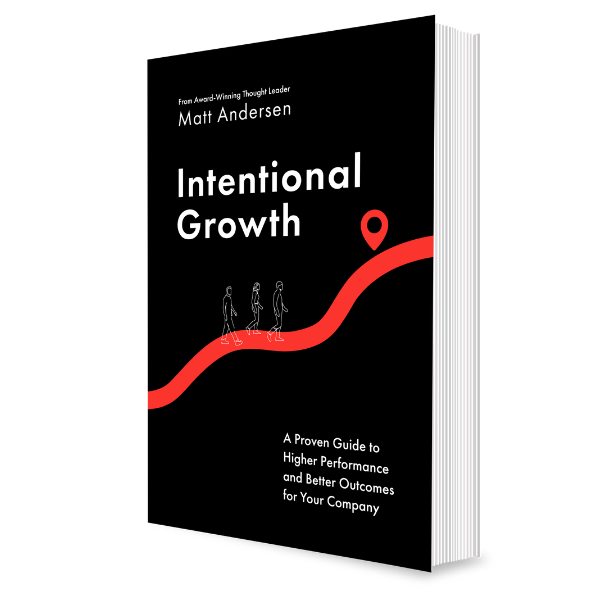
This piece is adapted from Matt’s book, Intentional Growth: A Proven Guide to Higher Performance and Better Outcomes for Your Company (Fast Company Press).
Matt Andersen is CEO of Westlake Securities, an Austin-based investment bank serving founder-owned businesses. He speaks regularly to CEO and owner audiences — see the Speaker Series page, or explore the CEO Masterclasses for a deeper working session on these frameworks.
More resources for growth-stage leaders live in our CEO Hub.
Thinking through a growth initiative? Let’s talk.
Questions? Contact info@westlakesecurities.com
Helpful Resources for CEOs
Your Next Transaction Starts with a Conversation
The best outcomes in middle-market M&A don’t happen by accident. They start with the right advisor, the right process, and the right timing.
If you’re considering a sale, recapitalization, or growth capital raise, whether that’s six months from now or three years out, we’d welcome a confidential conversation about what your options might look like.